
Strengthening Digital Health in Bangladesh: Building a Smarter, More Accessible Healthcare Future
Introduction
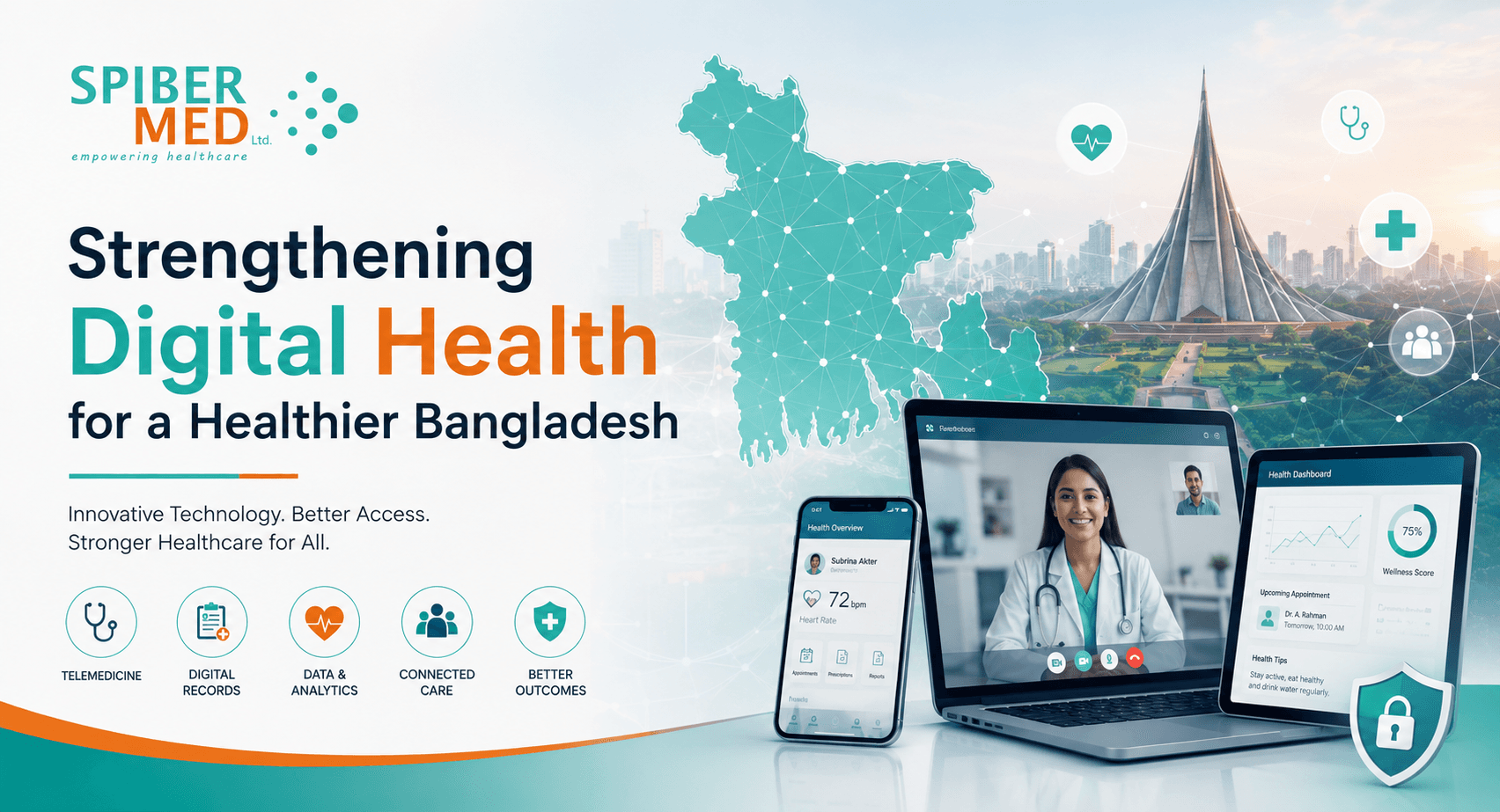
Bangladesh has made remarkable progress in healthcare over the past few decades. However, challenges such as limited healthcare access in rural areas, shortages of skilled healthcare professionals, fragmented health records, and increasing healthcare demands continue to affect the quality and efficiency of service delivery. Digital health presents a transformative opportunity to address these challenges and build a more resilient, accessible, and patient-centered healthcare system.
As Bangladesh advances toward becoming a Smart Bangladesh, digital health technologies can play a pivotal role in strengthening healthcare infrastructure, improving patient outcomes, and enhancing the efficiency of health services nationwide.
Understanding Digital Health
Digital health refers to the use of information and communication technologies (ICT) to improve healthcare delivery, management, and patient outcomes. It encompasses a wide range of solutions, including:
Electronic Health Records (EHR)
Telemedicine and virtual consultations
Mobile health (mHealth) applications
Artificial Intelligence (AI) in healthcare
Health Information Systems (HIS)
Remote patient monitoring
Digital diagnostics and imaging
Healthcare data analytics
These technologies help healthcare providers deliver more efficient, accurate, and accessible care while empowering patients to actively participate in managing their health.
The Current Landscape of Digital Health in Bangladesh
Bangladesh has already taken important steps toward healthcare digitalization. Government initiatives, private healthcare investments, and growing internet penetration have accelerated the adoption of digital health solutions.
Key developments include:
Expansion of telemedicine services across urban and rural regions
Digital health information management systems in public health facilities
Mobile-based healthcare platforms
Online appointment and consultation services
Digital disease surveillance and reporting systems
Increasing adoption of diagnostic imaging technologies
Despite these advancements, significant gaps remain in interoperability, infrastructure, workforce capacity, and equitable access to digital healthcare services.
Key Priorities for Strengthening Digital Health
1. Expanding Telemedicine Services
Telemedicine can bridge the healthcare gap between urban and rural populations by enabling remote consultations and specialist access. Expanding telemedicine networks can reduce travel costs, improve healthcare accessibility, and facilitate timely medical intervention.
2. Developing Integrated Electronic Health Records
A nationwide Electronic Health Record system would allow healthcare providers to access patient information securely across facilities. This can improve continuity of care, reduce medical errors, and enhance clinical decision-making.
3. Investing in Healthcare Infrastructure
Reliable internet connectivity, digital devices, cloud-based platforms, and secure data systems are essential for sustainable digital health implementation. Investments in healthcare infrastructure are critical to ensuring successful digital transformation.
4. Building Digital Health Workforce Capacity
Healthcare professionals require training and continuous professional development to effectively utilize digital technologies. Strengthening digital literacy among physicians, nurses, technologists, and administrators will support successful adoption.
5. Enhancing Data Security and Privacy
As healthcare becomes increasingly digitized, protecting patient information is paramount. Strong cybersecurity frameworks, data protection policies, and compliance standards are necessary to maintain trust and ensure patient confidentiality.
6. Leveraging Artificial Intelligence and Data Analytics
AI-powered solutions can assist in disease prediction, medical imaging interpretation, clinical decision support, and resource planning. Data-driven healthcare management can improve efficiency and support evidence-based policymaking.
Benefits of a Strong Digital Health Ecosystem
Strengthening digital health can deliver substantial benefits across the healthcare sector:
Improved Access to Care
Patients in remote and underserved areas can access healthcare services without geographical barriers.
Enhanced Quality of Care
Digital tools support accurate diagnosis, treatment planning, and clinical decision-making.
Greater Efficiency
Automation of administrative processes reduces paperwork, minimizes duplication, and improves workflow management.
Better Health Outcomes
Early detection, continuous monitoring, and timely interventions contribute to improved patient outcomes.
Cost Savings
Digital health solutions can reduce operational costs while improving resource utilization across healthcare facilities.
The Role of Public-Private Partnerships
The successful transformation of Bangladesh's healthcare system requires strong collaboration among government agencies, healthcare providers, technology companies, academic institutions, and development partners.
Public-private partnerships can accelerate:
Technology adoption
Infrastructure development
Workforce training
Research and innovation
Sustainable healthcare financing
Collaborative efforts can create scalable digital health solutions that benefit the entire population.
How Spiber Med Limited Contributes
At Spiber Med Limited, we believe that digital transformation is essential for the future of healthcare in Bangladesh. Through healthcare technology solutions, medical equipment integration, telemedicine support, hospital planning, digital health innovation, and capacity-building initiatives, we are committed to supporting the modernization of healthcare services across the country.
Our vision is to help healthcare institutions leverage technology to deliver better patient care, improve operational efficiency, and strengthen healthcare accessibility for all.
Conclusion
Digital health is no longer a future aspiration—it is a present necessity. By investing in technology, infrastructure, workforce development, and innovation, Bangladesh can build a stronger, more inclusive, and sustainable healthcare system.
The journey toward digital health strengthening requires collaboration, strategic planning, and continuous innovation. With the combined efforts of government, healthcare providers, technology partners, and organizations like Spiber Med Limited, Bangladesh is well-positioned to become a regional leader in digital healthcare transformation.
The future of healthcare in Bangladesh is digital, connected, and patient-centered—and the time to build that future is now.